Dr. Smitirupa Mishra, Consultant Pathologist, Sparsh Hospital, Bhubaneswar
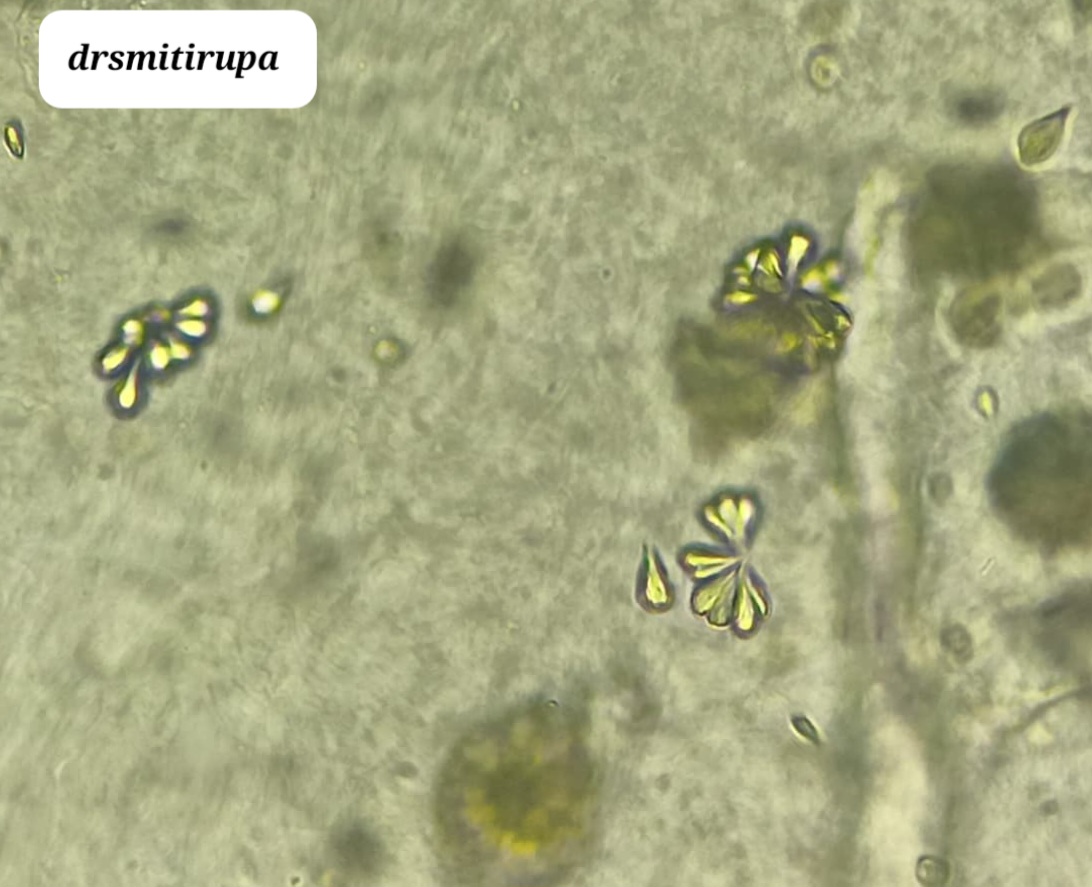
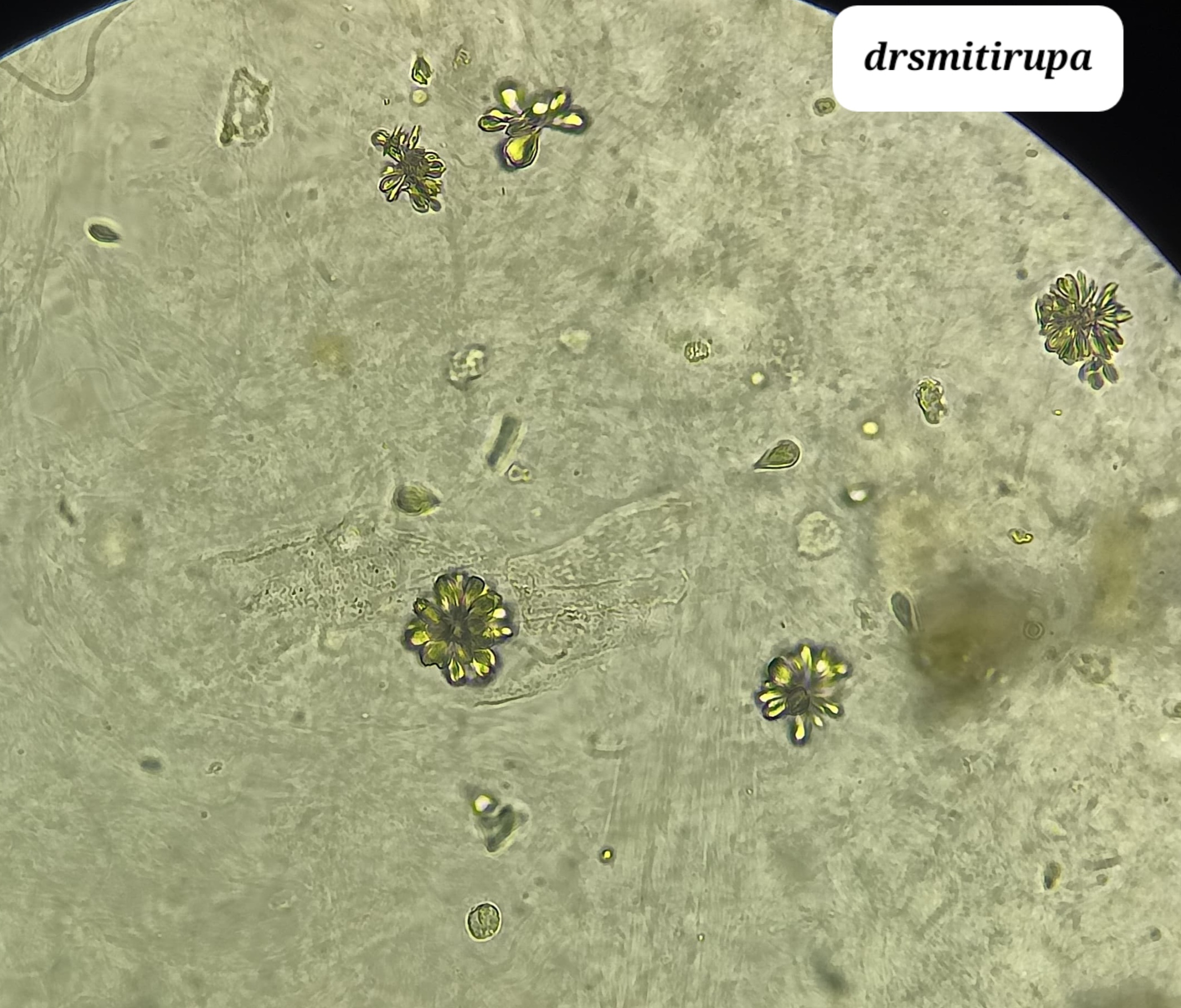
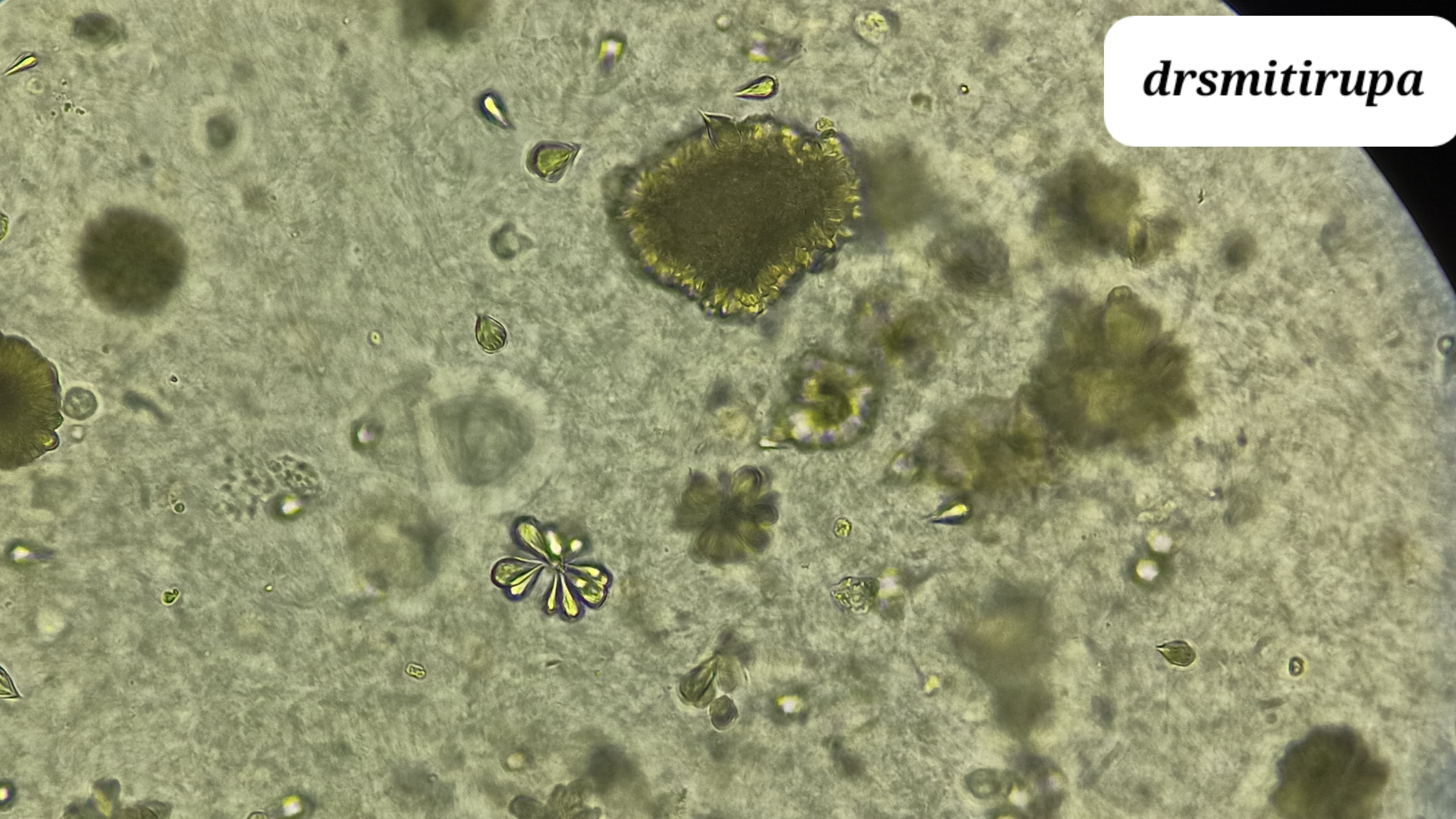
🔬Urine microscopy continues to surprise us with its remarkable variety of crystalline structures. One of the less commonly encountered but intriguing findings is the Calcium Oxalate Monohydrate Rosette Crystal.
These crystals appear as clusters of elongated or spindle-shaped crystals arranged in a beautiful rosette or flower-like pattern. While calcium oxalate crystals are among the most common urinary crystals, the rosette morphology is relatively uncommon and can easily be overlooked or mistaken for other crystalline deposits.
📌 Key Points:
• Composed of calcium oxalate monohydrate.
• Often seen in acidic to neutral urine.
• May be associated with hyperoxaluria, renal calculi, ethylene glycol toxicity, or dietary oxalate excess.
• Recognition is important as crystal morphology can provide valuable clues to underlying metabolic conditions.
🔍 The art of urine microscopy lies not only in identifying cells and casts but also in appreciating these microscopic "works of nature" that may hold significant clinical relevance.
Every crystal tells a story—sometimes of diet, sometimes of disease, and occasionally of a hidden metabolic disturbance waiting to be discovered.
Have you encountered rosette-shaped calcium oxalate monohydrate crystals in your practice?
Share your experience and interesting crystal images below!
#Pathology #UrineMicroscopy #ClinicalPathology #LaboratoryMedicine #MedicalEducation #Urinalysis #CrystalMorphology #CalciumOxalate #Pathologist #MedLab